Why microbial soil science is the missing link in successful revegetation

Currently, commercial revegetation sits at a crossroads.

On one side is the legacy of decades-old thinking, where degraded soils are viewed as inert chemistry sets – the strategy tends to be to change the pH, add more nitrogen, throw gypsum at the sodium and hope something sticks. On the other side is what microbial soil science now confirms — that soil is a living biological system, and without the right microbial engine beneath the surface, no amount of fertiliser, lime or seed will deliver lasting results.

This shift in understanding is significant, because it’s redefining what successful revegetation looks like. For more than a decade, EnviroStraw has worked with contractors across Australia to regenerate some of the country’s most depleted commercial sites, from mine rehabilitation to large civil projects. The consistent pattern across those years has been that revegetation doesn’t fail because contractors lack inputs – it fails because the soil lacks biology.

At EnviroStraw, we know that microbes are not an add-on or an optional booster – they’re the mechanism that makes soil function and without them, soil becomes inert dirt. With them, it becomes a living engine capable of driving nutrient cycling, root resilience, water uptake, structural stability and long-term plant establishment.

In this blog, we’ll take a deep dive into microbial soil science – why microbes matter, why conventional chemistry is no longer enough and how EnviroStraw’s microbial science is transforming revegetation outcomes across Australia.

To explore these topics further, we recommend watching our YouTube discussions with leading soil scientist Paul Storer, where we talk in depth about the role microbes play in soil function and rehabilitation outcomes.

On mine sites and construction projects, the first challenge is always that the soil simply isn’t functioning as soil anymore.

When topsoil is stripped and stockpiled for six months to three years, it becomes biologically dead. Nutrients leach out, beneficial microbes collapse and structure breaks down. What remains on the site is an inert medium, unable to support plant life.

Subsoils offer even less positive attributes, as they often have:

  • High sodium
  • Extreme acidity
  • Compaction
  • Dispersive tendencies
  • Toxic aluminium
  • Almost no carbon.

For years, conventional rehabilitation programs have tried to fix these challenges using chemistry alone, including lime, NPK, urea, gypsum, synthetic fertilisers and water-soluble nitrogen injections. But the issue is that chemical programs treat symptoms, rather than the systems that cause them.

On the surface, synthetic fertilisers can trigger early green-up, and contractors often see a great initial strike in the first two to four weeks. Then, predictably, the plants hit the wall – yellowing, stalling, thinning out, and succumbing to drought, heat and poor root development. Patchiness emerges and erosion follows, because water-soluble fertilisers behave like junk food – giving plants a fast burst of energy but leaving the soil weaker than before.

The nutrient efficiency problem

Urea is a classic example of this ‘junk food’ analogy. Of every 100 units applied:

  • ~30% leaches past the roots into groundwater
  • ~30% volatilises into the atmosphere as nitrous oxide
  • Only ~30% is actually available to the plant.

That means 70% of the investment is wasted,  and it also burns soil carbon in the process. For every unit of nitrogen metabolised, the soil consumes ten units of carbon.

Over time, this destroys soil structure, collapses pore spaces and leads to hydrophobicity, erosion, crusting and hard-setting surfaces.

Once carbon is burned and structure breaks down, water can’t infiltrate, roots can’t penetrate, oxygen can’t circulate and soils become anaerobic and increasingly hostile. It’s for this reason that  so many conventional programs demonstrate short-term cover but poor long-term success – because critically, none of this rebuilds the microbiology. Chemical systems assume plants can grow in a vacuum, whereas biology-based science proves the opposite.

So what is microbial soil science — and why are microbes so essential?

Microbes are the engine that drives a soil ecosystem, and they include a diverse number of elements.

  • Beneficial bacteria
  • Mycorrhizal fungi
  • Carbon-sequestering microbes
  • Nitrogen-fixing bacteria
  • Cellulose degraders (critical for breaking hydrophobic coatings).

It can be helpful to think of microbes as creating a protective rhizosphere around a root, buffering out constraints like aluminium toxicity, extreme pH, sodium and compaction. This rhizosphere acts as a biological shield – an envelope where microbes regulate the chemistry, protect the plant from toxins and build the conditions for growth.

Microbes turn dead dirt back into soil

When bacteria and fungi colonise the root zone, it offers a myriad of benefits.

  • The pH is balanced locally where the plant needs it
  • Nutrients locked in the soil matrix are released gradually
  • Roots grow deeper and stronger
  • Water is drawn in from a wider radius
  • Plant hormones stimulate above-ground growth
  • Carbon is stored, stabilising structure.

Most importantly, microbes bring the soil back to life.

pH vs rhizosphere reality — why plants don’t grow in “bulk soil”

Traditional soil programs obsess over pH, advising adding lime to lift acidic soils, adding sulfur to bring alkalinity down and chasing the magic number of pH6.5. But in microbial soil science systems, pH is not the driving force behind what happens – the rhizosphere is.

Microbes create the pH that plants want – if the soil tests at pH 4.5, but the plant prefers pH 6.2, microbes simply pull potassium and magnesium into the rhizosphere to shift the micro-environment upward. Conversely, in alkaline soils, beneficial fungi can bring pH down around the roots. This means plants can thrive in conditions where conventional wisdom says they shouldn’t, and the real driver is Eh (redox potential). Eh measures the electron energy available in the soil – essentially, how much fuel microbes have to function.

  • High Eh = aerobic, oxygenated, biologically active soil
  • Low Eh = anaerobic, stagnant soil dominated by denitrifiers and methane-producing bacteria.

On rehabilitation sites, Eh is almost always low because stockpiling destroys carbon and oxygen flow. With low Eh, soils become bacterial-dominated and hostile to the fungi that 80% of plants depend on. In contrast to that, EnviroStraw’s BioGrowth system raises Eh – enabling fungi and mycorrhizae to flourish, and restoring the balance needed for a functional ecosystem.

Seed, feed and shelter – the three essentials for microbial success

Rebuilding biology with microbial soil science requires three simultaneous actions.

Introduce beneficial microbes

EnviroStraw applies a suite of 24 carefully selected bacterial and fungal strains, each chosen for its ability to tolerate harsh subsoils, form protective rhizospheres and drive nutrient cycling.

Feed them properly

Controlled-release natural mineral fertilisers feed the microbes, not the plant. The microbes then feed the plant, restoring the natural nutrient exchange system that all healthy soils rely on.

Give them habitat

As roots grow, microbes need pores, structure, carbon and oxygen, and this is where biochar becomes a critical building block.

Biochar – the microbial housing and carbon engine

Biochar is one of the most powerful materials in modern revegetation – not because it acts as fertiliser, but because it acts as  architecture. It provides:

Long-term habitat

In hostile soils, microbes retreat into biochar pores to survive, then expand outward as conditions stabilise.

Carbon scaffolding

Microbes deposit biofilms onto biochar surfaces, growing a carbon sponge that improves water holding capacity and creates air-filled pores.

Structural strength

Biochar-derived carbon helps reshape degraded soils, giving them tensile integrity and resistance to erosion.

Redox stability

Recalcitrant carbon in biochar maintains higher Eh, supporting aerobic microbial communities.

EnviroStraw’s research over more than 20 years has shown that adding biochar dramatically accelerates microbial establishment and plant resilience, especially in extreme environments.

The power of mycorrhizal fungi — the underground internet

Mycorrhizal fungi are often the missing link in failed revegetation efforts. These fungi attach to plant roots and extend up to a metre into the soil, pulling water and nutrients from distances unreachable by roots alone. They also excrete glomalin, a “concrete carbon” that binds soil particles into stable aggregates, improving structure for decades, and possibly even centuries.

In disturbed sites, mycorrhizae are almost always absent, and reintroducing them fundamentally changes plant performance:

  • Improved drought resilience
  • Greater nutrient uptake
  • Stronger root systems
  • Deeper soil penetration
  • Reduced erosion.

They are, quite literally, the communication and logistics network of the soil ecosystem.

Nitrogen-fixing and carbon-sequestering microbes — nature’s fertiliser

A major reason chemical systems fail is the rapid loss and inefficiency of water-soluble nitrogen.

In contrast, EnviroStraw’s microbial suite includes:

  • Nitrogen-fixing bacteria

These pull nitrogen directly from the atmosphere (which is 70% nitrogen) and convert it into amino acids for the plant, eliminating the nitrogen “crash” that occurs in conventional programs.

  • Carbon-building microbes

Up to 50% of a plant’s sugars are secreted into the root zone. Microbes take these sugars and store them as soil carbon – rebuilding structure, water-holding capacity and aeration from the ground up. This is how natural ecosystems sustain themselves without synthetic fertilisers. EnviroStraw replicates this natural process in engineered, commercial contexts.

Correcting hydrophobic soils — a microbial breakthrough

One of the biggest barriers in commercial revegetation is hydrophobic soils – and microbes solve this biologically. Cellulose-digesting organisms in EnviroStraw’s suite break down the glycocalyx – the waxy coating on degraded soils that prevents water infiltration.

Once removed:

  • Water infiltrates normally
  • Pore spaces refill with oxygen
  • Carbon sponges rehydrate
  • Roots access deeper moisture
  • Erosion risk falls significantly.

This is something chemical programs cannot achieve, and the outcome is resilient, self-sustaining plant communities. When microbes, biochar, controlled-release minerals  and structured habitat work together, the transformation is dramatic.

Dead dirt ? Living soil

Short-term green-up ? Long-term establishment

Chemical dependency ? Biological self-sufficiency

Erosion-prone ? Structurally stable

High-input ? High-efficiency

Plants grow stronger, last longer between rainfall events and resist stressors more effectively, because the rhizosphere acts as a protective ecosystem.

Why EnviroStraw leads the industry in microbial revegetation

EnviroStraw’s BioGrowth system is built on decades of scientific research and on-ground evidence. It is not a single product – it’s a complete biological system that includes:

  • A suite of 24 bioenergetic microbial strains
  • Mycorrhizal fungi
  • Nitrogen-fixing organisms
  • Carbon builders
  • Cellulose degraders
  • Biochar architecture
  • Controlled-release mineral fertilisers
  • Soil conditioning designed for extreme sites.

Together, these components rebuild soil health in a way chemical programs cannot.

Bioenergetic microbes are the breakthrough

Bioenergetic strains communicate with plants through biochemical signalling, responding dynamically to nutrient needs and environmental stress. They:

  • Create and maintain the rhizosphere
  • Increase water infiltration
  • Optimise root growth
  • Stabilise soil carbon
  • Improve nitrogen efficiency
  • Unlock bound phosphorus
  • Restore fungal dominance in degraded soils.

They effectively switch the soil back on — which is why EnviroStraw’s programmes consistently outperform conventional rehabilitation approaches.

The future of commercial revegetation is biological

Across mining, civil construction, roadside projects, and large-scale rehabilitation, the soil science shows that, whilst chemical programs can start plants, microbial programs sustain them.

Australia’s environmental challenges – drought cycles, erosion risk, salinity, soil disturbance – demand solutions that work with nature, not against it. EnviroStraw’s microbial-first approach is transforming outcomes because it rebuilds the system beneath the surface, where success truly begins. Rather than being a niche idea, microbes are the missing link – and now the science is clear, the industry is shifting. EnviroStraw is leading that shift — helping contractors regenerate the most depleted soils in the country with solutions proven in the harshest environments.

An end-to-end solution for commercial hydromulch contractors

For more than a decade, EnviroStraw has been on the ground alongside commercial hydromulch and revegetation contractors in Australia — helping them tackle depleted, compacted and highly disturbed soils that don’t respond to standard approaches.

Since 2011, we’ve supported contractors to regenerate some of the toughest and steepest sites in the country with the objective of delivering vegetation outcomes that are predictable, repeatable and commercially viable. And now, we’ve extended our offering to be truly end-to-end – supporting commercial hydromulch contractors throughout the entire project lifecycle.

Built for commercial hydromulch contractors who need outcomes, efficiency and profitability

Whether you’re running a two-person operation or a multi-crew business, your success often relies on three factors.

  • Obtaining consistent revegetation results
  • Completing work efficiently and safely
  • Maximising margins with products and machinery that perform.

At EnviroStraw, everything we do is developed with these considerations in mind.

Our trademark BioGrowth program is engineered to establish native vegetation on disturbed sites while actively capturing and storing carbon, and has been used on thousands of hectares nationwide. Applied with deep soil analysis, expertise and in conjunction with our range of Australian-made hydromulch, ameliorants and polymers, commercial hydromulch contractors consistently see outcomes that traditional approaches simply can’t achieve.

Our outcomes are proven and backed by field data, soil science and years of real-world success across road batters, national parks, commercial sites and retired mining sites.

A true end-to-end partner for contractors

In 2025, we expanded our offering to partner with contractors from the very beginning, including the critical decision of which machinery will best suit their operations.

We knew our commercial hydromulch contractors needed a single partner who could support them from machinery purchase through to product selection and ongoing soil science support on live projects, and that’s why we partnered with Verdetec – bringing globally leading hydromulching machinery to Australia. The result is an end-to-end solution purpose-built for commercial contractors, that delivers three key elements.

  • Machinery – robust, efficient units designed for Australian conditions
  • Products – Australian-made hydromulches, ameliorants and polymers that outperform traditional blends
  • On-site soil science expertise – oversight that saves costly rework, prevents failures and ensures vegetation takes the first time

For commercial hydromulch contractors, this means fewer suppliers, less admin and far more predictable project outcomes.

Why contractors choose EnviroStraw

There’s a reason EnviroStraw’s products are specified by government departments across the country, and there’s a reason contractors using EnviroStraw consistently outperform competitors – our approach is grounded in regenerative soil science that works with nature, not against it.

Our end-to-end service delivers:

  • Better establishment rates and fewer returns to site
  • Faster growth, happier clients and stronger referrals
  • Science-backed solutions that reduce risk
  • A single partner for machinery and product supply – reducing inefficiency, cost and downtime.

When margins, timelines and results matter, having this level of support becomes a significant competitive advantage.

Soil science is not optional for commercial hydromulch contractors

Many contractors are now realising that hydromulch alone can’t overcome poor soil structure, low nutrient availability or compromised biology. Vegetation fails not because the product was wrong, but because the soil wasn’t ready.

At EnviroStraw, we’ve eliminated that risk – every product we manufacture and every recommendation we make is backed by our soil science team. This ensures the solution you apply is fit for purpose, site-specific and designed to deliver results the first time.

The future of revegetation belongs to contractors who take a whole-of-soil approach

Australia’s demand for revegetation outcomes is increasing. Civil contractors, councils, mining companies and developers aren’t looking for “close enough” anymore – they expect scientifically supported solutions, predictable performance and suppliers who can back their claims.

EnviroStraw is the only Australian manufacturer offering contractors a complete, connected, end-to-end system. It’s why we’re trusted. It’s why we’re specified.  And it’s why the most successful contractors are choosing EnviroStraw.

pH vs EH and what your soil really needs

When we talk about soil constraints on revegetation, pH often gets blamed first. Too acidic? Add lime. Too alkaline? Try to correct it.

But as soil scientist Paul Storer explains in this video, pH is only part of the picture — and in biological revegetation programs, it’s often not the limiting factor people think it is. The real action doesn’t happen in the bulk soil. It happens in the rhizosphere — the living zone around roots where microbes can completely reshape conditions for plant success.

What soil pH actually tells us

Soil pH is simply a chemical measure of how acidic or alkaline the soil is. And at the extremes, it can seriously restrict plant growth.

In low pH soils (around pH 4–4.5), elements like aluminium and iron can dominate the chemistry. Many plants struggle in these conditions because high aluminium availability can become toxic and restrict growth.

At the other end, high pH soils (pH 8–10) create a different problem – key nutrients such as zinc and manganese can become locked up, meaning plants can’t access them. Zinc is especially important for root development, so if it’s unavailable, plants often establish poorly and fail to thrive long-term.

Traditionally, the solution is simple: force the soil into an “optimal” pH range. That usually means applying large volumes of lime or dolomite to shift acidic soils up toward a target like pH 6.5 – regardless of whether that pH is truly what the plant (or its biology) actually needs.

Why biological systems don’t obsess over bulk pH

In a microbial revegetation program, pH matters – but not in the same way. That’s because microbes don’t just live in the rhizosphere… they engineer it.

When a seed germinates and roots begin to develop, beneficial microbes form around the root system and can create the environmental conditions the plant needs, including adjusting pH locally.

So even if the surrounding soil is pH 4.5, microbes can shift the pH inside the rhizosphere – often by as much as two pH units. That means the plant may experience something closer to pH 6.2–6.5 in its root zone, even though the broader soil remains strongly acidic.

Instead of changing the entire soil profile with tonnes of amendments, we can create a functional pocket of life where roots can actually operate.

And it’s not just about “raising” pH. Different microbial groups naturally lean different ways:

  • Bacteria tend to prefer more alkaline conditions
  • Fungi generally prefer more acidic conditions

Together, they help condition the rhizosphere toward what the plant needs to grow.
The missing metric: Eh (redox potential)

Where conventional programs fixate on pH, microbial programs also pay attention to something many projects ignore entirely: Eh — the redox potential of soil.

If pH is about hydrogen ions, Eh is about electrons, and it’s closely linked to the soil’s energy status. Microbes run on electron transfer – it’s how they generate energy – so Eh tells us whether the soil environment supports the right biology.

In simple terms:

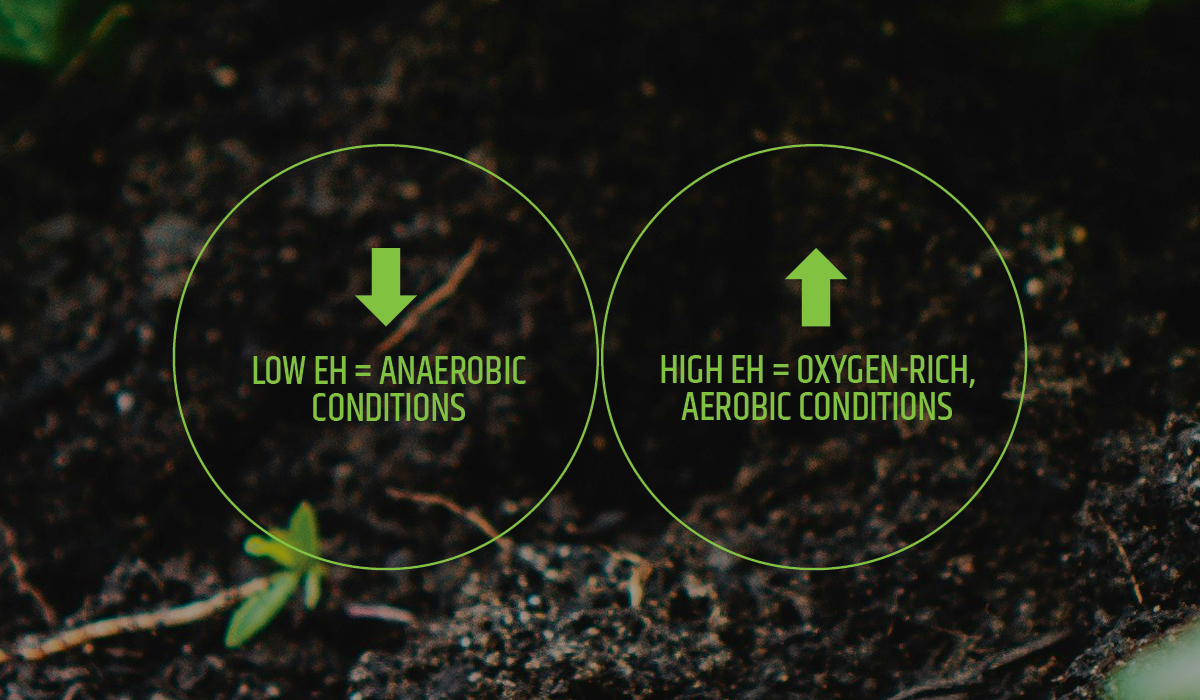
  • High Eh = oxygen-rich, aerobic conditions
  • Low Eh = anaerobic conditions (often waterlogged, stagnant, biologically hostile for roots)

This matters because root systems don’t like anaerobic zones. And when soils drop into low Eh states, they often become dominated by undesirable microbes, including:

  • Denitrifiers (break down nitrogen availability)
  • Sulfide-producing bacteria (can release hydrogen sulfide)
  • Methanogens (associated with highly anaerobic environments)

On the other hand, soils with healthier Eh conditions support microbes that drive ecosystem function, such as:

  • aerobic decomposers
  • nitrifiers
  • organisms involved in carbon, nitrogen and sulfur cycling

And importantly for revegetation: fungi tend to sit in the “middle ground” — they like moderate Eh. That becomes critical because most plants depend heavily on fungi.

Microbial programs rebuild conditions instead of fighting chemistry

In conventional fertiliser systems, nutrient delivery depends heavily on soluble inputs.

But water-soluble nutrition creates major inefficiencies:

  • nutrients wash through easily
  • phosphorus gets locked up by aluminium or calcium
  • roots can only draw nutrients from small “depletion zones”

Phosphorus is especially limited – the transcript notes it may only be accessible from about a millimetre away from the root, meaning even if phosphorus exists in the soil, it may be functionally unreachable.

So the system responds by applying more and more fertiliser.

A biological system moves the opposite way – rather than forcing the bulk soil into compliance, microbes create a buffered rhizosphere that:

  • adjusts pH locally
  • improves nutrient availability
  • expands the functional reach of plant roots (especially via fungi)
  • reduces the need for heavy chemical correction
  • avoids nutrient excess that can pollute surrounding environments
So when do you adjust pH in a biogrowth program?

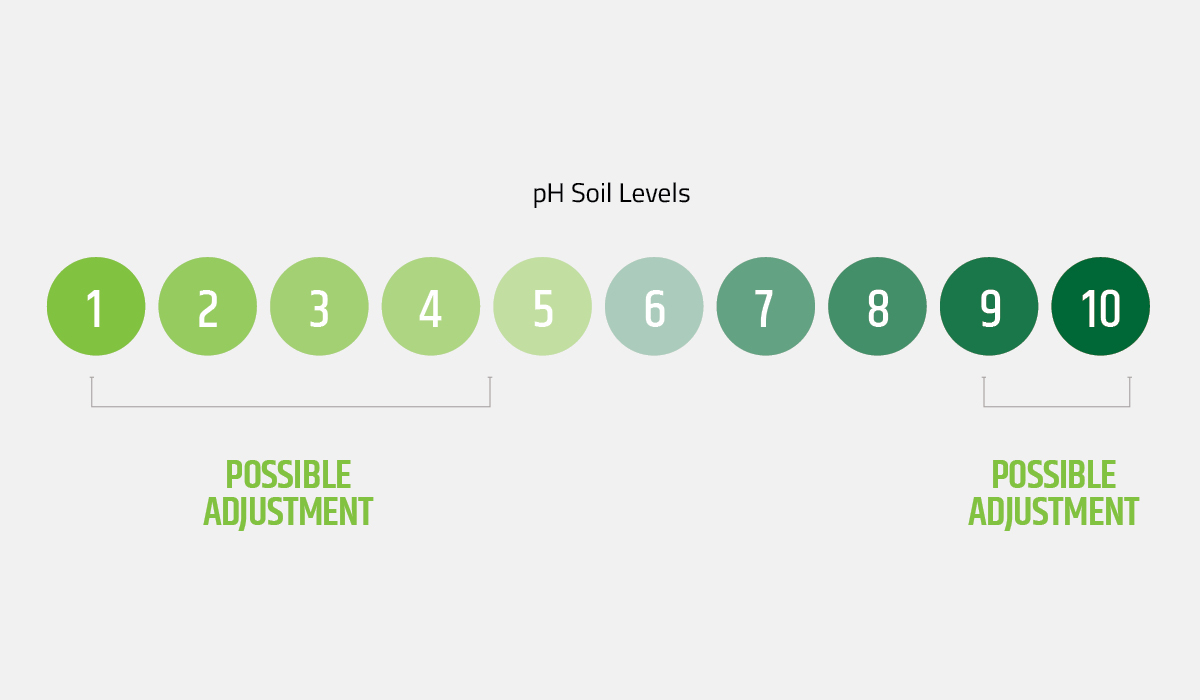
The key takeaway is simple – most of the time, you don’t. Only in extreme cases – highly acidic soils (around pH 4.5 or lower) or highly alkaline soils (pH 9–10) – might pH adjustment become necessary.

But even then, it’s approached differently. The goal isn’t to chase a perfect number. It’s to create a workable window where microbes can thrive, form a rhizosphere, and do the buffering themselves. In fact, calcium may still be applied in many projects — but often because the soil is deficient in calcium, not because the goal is to manipulate pH.

Stop chasing perfect pH and build living function

Revegetation success doesn’t come from forcing every hectare of soil into an “ideal” pH range. It comes from rebuilding the biology that can:

  • protect roots
  • reshape conditions
  • unlock nutrients
  • and stabilise soil systems long-term

To find out more from Paul Storer about how microbes can create stability, resilience and growth that improves over time, watch the full video.